
Fungal Toenail Treatment in Upland, CA
Fungal Toenail Treatment Near You
A thick or discolored toenail can be difficult to trim, uncomfortable inside shoes, and frustrating to manage on your own. At Family Foot & Ankle Center, we provide fungal toenail treatment in Upland, CA, to confirm the cause of the nail changes and recommend an appropriate treatment plan.
Several nail conditions can resemble a fungal infection, so appearance alone may not provide a reliable diagnosis. If you are looking for fungal toenail treatment near you, we can examine your nails, discuss your health history, and explain which options may be suitable.

What Is Fungal Toenail Treatment?
A fungal toenail infection, also called onychomycosis, occurs when certain fungi infect the nail. The infection may begin at the edge or beneath the nail and gradually spread.
An affected toenail may become:
Yellow, white, brown, or cloudy
Thickened or difficult to trim
Brittle, crumbly, or ragged
Misshapen or lifted from the nail bed
Surrounded by debris beneath the nail
Tender when pressed inside a shoe
Nail injuries, psoriasis, and other conditions can cause similar changes. A sample of nail clippings or debris may be collected for testing, particularly before oral antifungal medication is prescribed.
Our podiatrist in Upland, CA, can examine the affected nail and determine whether testing or treatment may be appropriate.
When to See a Podiatrist for a Toenail Concern
A mild nail change is not always urgent, but an examination can help when the problem persists or becomes uncomfortable.
Consider visiting a podiatrist near you if you notice any of the following:
Increasing discoloration
Yellow, white, or brown areas continue to spread.
Progressive thickening
The nail becomes difficult or unsafe to trim.
Nail separation
Part of the nail begins lifting from the nail bed.
Ongoing discomfort
Pressure from shoes makes the toe painful.
Surrounding inflammation
The skin becomes red, swollen, warm, or tender.
Multiple affected nails
Similar changes begin appearing in other toenails.
Increased health risks
You have diabetes, poor circulation, reduced sensation, or a weakened immune system.
Seek prompt care if you develop drainage, worsening redness, significant swelling, or an open area around the nail.
What Are the Benefits of Fungal Toenail Treatment?
An accurate diagnosis can prevent you from spending time on products that are unlikely to address the actual problem. Depending on your condition, care may:
Confirm whether fungus is causing the nail changes
Reduce excessive nail thickness
Make the nail easier to maintain
Relieve pressure inside footwear
Address discomfort around the toe
Limit opportunities for the infection to spread
Establish realistic expectations for nail regrowth
Treatment can improve an infected nail, but results vary. Reinfection or recurrence remains possible even after successful treatment.
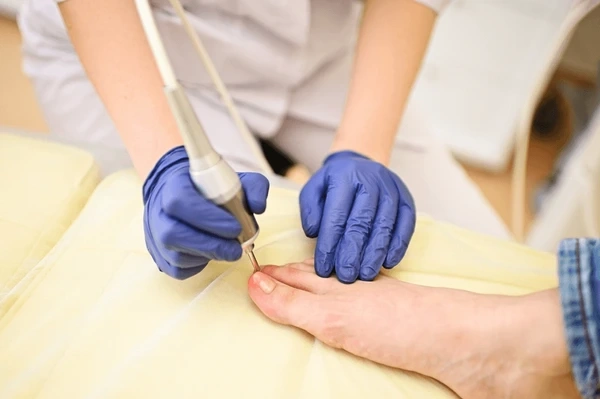
Fungal Toenail Treatment Options
The recommended approach depends on the number of affected nails, the extent of the infection, your health, and previous treatment.
Options may include:
Topical antifungal medication
Prescription solutions or lacquers may be appropriate for certain mild or moderate infections.
Oral antifungal medication
Prescription tablets may be considered for more extensive infections after reviewing your health, medications, and possible risks.
Nail debridement
Reducing a thickened nail can ease pressure and may help some topical medications reach the affected area.
Nail removal
Partial or complete removal may be considered in selected cases involving severe thickening, pain, or treatment-resistant infection.
Foot-care guidance
Keeping the feet dry and treating fungal skin infections may help reduce opportunities for reinfection.
Laser treatment
Certain laser devices may temporarily improve the amount of clear-looking nail, but they have not been established as a replacement for antifungal medication.
Oral antifungal drugs can cause side effects and interact with other medications. They are not appropriate for everyone, and blood tests may be needed before or during treatment.
What to Expect During Your Toenail Evaluation
When providing fungal toenail treatment in Upland, CA, we usually follow these steps:
Reviewing your concerns
We ask when the nail began changing and whether you have pain, skin symptoms, or other affected nails.
Discussing your health
We review relevant medical conditions, medications, allergies, and previous treatments.
Examining your nails
We assess the color, thickness, shape, texture, and surrounding skin.
Considering a sample
We may collect nail clippings or debris to help confirm whether a fungal infection is present.
Reducing thickness
We may carefully trim or thin the nail when doing so is safe and appropriate.
Selecting treatment
We explain suitable options, their possible risks, and the time needed to evaluate progress.
Planning follow-up
We monitor new nail growth and adjust treatment when necessary.
Why Choose Family Foot & Ankle Center for Fungal Toenail Treatment?
Nail changes deserve an accurate evaluation rather than assumptions based on appearance. At Family Foot & Ankle Center, we offer:
Careful diagnosis
We consider fungal infection and other possible causes of nail changes.
Individualized options
We base recommendations on the severity of the infection and your overall health.
Safe nail care
We carefully reduce thick or difficult-to-trim nails when appropriate.
Realistic expectations
We explain that improvement depends on treatment response and new nail growth.
Practical prevention guidance
We discuss habits that may reduce exposure and reinfection.
Consistent monitoring
We follow your progress and revise the plan when needed.
Take the Next Step Toward Healthier Nails
Toenail fungus can be persistent, and visible improvement takes time as a new nail grows. At Family Foot & Ankle Center, we offer fungal toenail treatment near you to establish the diagnosis and help you choose an appropriate course of care.
Call us at (909) 920-0884 or visit us at 984 W Foothill Blvd Ste B, Upland, CA 91786, United States, to schedule an appointment.
Frequently Asked Questions
Are fungal toenail infections contagious?
The fungi can spread through direct contact or contaminated surfaces and personal items. Avoid sharing nail tools, shoes, socks, or towels, and wear protective footwear in shared damp areas.
Can an over-the-counter product cure toenail fungus?
Some mild infections may improve with nonprescription products, but many products do not penetrate the nail effectively. Persistent or extensive nail changes should be examined before you continue self-treatment.
How long does it take for an infected toenail to look clear?
Toenails grow slowly. Even after the infection responds to treatment, it may take approximately 12 to 18 months for a new toenail to grow fully. The exact timeline varies.
Can toenail fungus return after successful treatment?
Yes. Reinfection and recurrence are possible. Keeping your feet dry, changing socks regularly, disinfecting or replacing contaminated footwear, and treating athlete’s foot may help reduce the risk.
Does laser therapy cure toenail fungus?
Laser devices may temporarily increase the amount of clear-looking nail, but evidence that they consistently eliminate the fungal infection is limited. We can explain the expected benefits and limitations before you consider this option.